
By Larry Ramirez
Introduction – Seeing What Others Cannot
One of the most difficult moments in leadership is not making a decision.
It is realizing that you see something others do not—and knowing that convincing them may be harder than acting on it yourself.
Leaders regularly encounter this moment when they challenge long-standing processes, question familiar explanations, or point out inefficiencies that feel obvious once named. The resistance that follows often feels disproportionate. The logic is sound. The data is clear. And yet the response is emotional, defensive, even hostile.
This tension is not new. More than two thousand years ago, Plato described it with unsettling precision.
The Allegory of the Cave
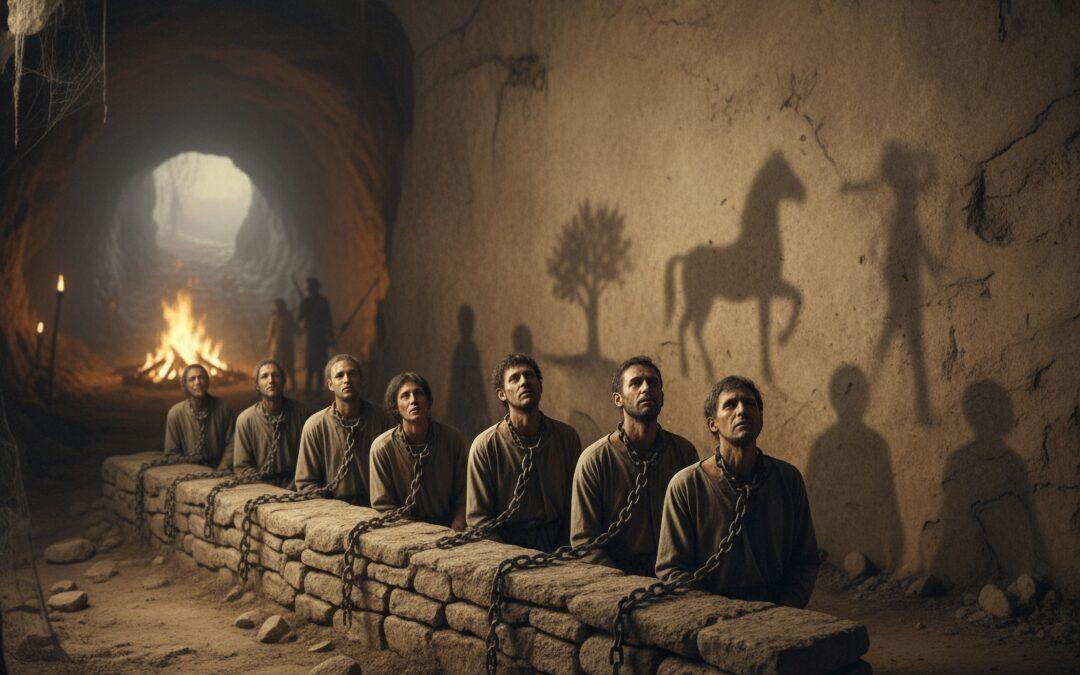
In Republic, Plato asks us to imagine a group of people chained inside a cave since birth. They face a wall and cannot turn their heads. Behind them burns a fire, and between the fire and the prisoners, objects are carried back and forth. The prisoners see only the shadows cast on the wall in front of them.
Because this is all they have ever known, the shadows are their reality.
They name the shapes. They argue about their meaning. They build status around who interprets them best. To them, understanding the shadows is wisdom.
Now imagine one prisoner is freed. He turns, sees the fire, leaves the cave, and steps into the sunlight. At first, the light is painful. His eyes resist. But eventually, he sees the world as it truly is—objects instead of shadows, causes instead of effects.
When he returns to the cave to tell the others what he has seen, they reject him. His eyes struggle in the darkness. His explanations sound strange. The shadows feel safer than the truth.
To the prisoners, he is not enlightened—he is dangerous.
Why the Allegory Endures
The power of the allegory is not that the prisoners are foolish. They are rational within the limits of their experience. The cave is not ignorance—it is familiarity.
The prisoners defend the shadows because the shadows have meaning, history, and emotional safety. Their identity is tied to them. Their expertise depends on them. Their social order is built around interpreting them.
Leaving the cave requires more than intelligence. It requires the willingness to let go of certainty.
This is where leadership enters the story.
The Modern Cave
Organizations are full of caves.
They are built from legacy processes, unwritten rules, historical workarounds, and shared assumptions about “how things really work.” Over time, these structures become invisible. People stop seeing them as choices and start seeing them as reality.
Metrics become shadows.
Procedures become shadows.
Reports, approvals, and rituals become shadows.
Teams debate the shadows endlessly—optimizing them, defending them, and explaining why they cannot be changed—without ever turning to see what casts them.
From inside the cave, this feels like competence.
When Leaders Step Outside
Leaders who study systems, question processes, or seek improvement are often the ones who step outside the cave—sometimes accidentally.
They notice that rework is normal.
That exceptions dictate design.
That inefficiencies are protected by tradition.
That problems are managed instead of eliminated.
From outside the cave, these patterns are obvious. From inside, they are invisible—or worse, they are justified.
When leaders return with a new perspective, they are often met with resistance that feels personal but is actually structural.
“This won’t work here.”
“We tried that before.”
“You’re not seeing the whole picture.”
What they are really hearing is: The shadows make sense to us.
Why Change Feels Like Threat
The prisoners are not defending shadows—they are defending identity.
In organizations, people often tie their value to their ability to navigate complexity that should not exist. They are rewarded for interpreting the shadows better than others. Removing those shadows threatens status, expertise, and psychological safety.
This is why logic alone rarely works.
This is why data alone rarely persuades.
This is why improvement often feels like an attack.
Leaders are not arguing with facts. They are challenging a shared reality.
Leadership Is Not Forcing the Light
Plato’s allegory is often misread as a story about dragging people into truth. It is not.
The freed prisoner does not return as a conqueror. He returns as a translator—and fails because translation is harder than revelation.
Leadership is not about shattering the cave. It is about helping people slowly turn their heads.
That requires patience.
It requires empathy.
It requires understanding why the cave exists in the first place.
Most of all, it requires recognizing that leaving the cave is disorienting, uncomfortable, and often unwanted.
Why Leaders Are Often Rejected
Leaders who see beyond the cave are frequently misunderstood. Their urgency feels reckless. Their clarity feels dismissive. Their confidence feels threatening.
They are accused of not understanding “how things really work,” even when they understand them better than most.
This is not because they are wrong.
It is because they are early.
Every organization decides whether it will punish those who see differently or learn from them. Most do the former until circumstances force the latter.
Conclusion – The Burden of Seeing Clearly
Plato never promised that leaving the cave would make leadership easier. He suggested the opposite.
Seeing clearly carries responsibility. It isolates. It frustrates. It forces leaders to operate between two worlds—the one they see and the one others still believe in.
Leadership is not about standing in the sunlight and shouting truths into the darkness. It is about walking back into the cave, understanding the shadows, and patiently helping others recognize that they are not the whole story.
That is slow work.
That is uncomfortable work.
That is leadership.
And not everyone who sees the light will be thanked for it.