
By Larry Ramirez
Introduction – The First Time You Open the Hood
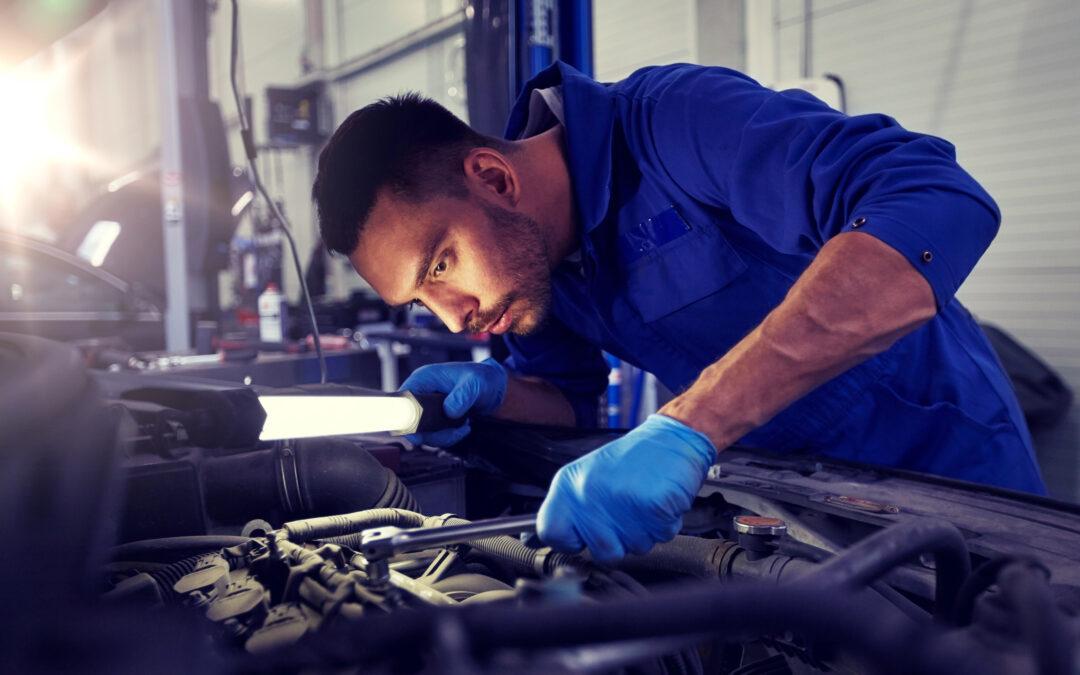
Every mechanic remembers the first time they opened the hood of a machine they didn’t yet understand.
The components are familiar in name—belts, hoses, fasteners, systems—but unfamiliar in arrangement. Some parts are worn smooth by time and use. Others are new, shiny, recently replaced. There are signs of past repairs: mismatched bolts, rerouted lines, improvisations that solved a problem in the moment but introduced new ones later.
An organization looks much the same when a leader steps into it for the first time.
From the outside, it presents as a single unit. Inside, it is a living assembly of parts—people, processes, habits, history—each carrying its own wear patterns, strengths, and vulnerabilities. The leader, like the mechanic, is not there to admire the machine. They are there to understand it, diagnose it, and decide how it must change if it is going to perform better tomorrow than it did yesterday.
But here is where the analogy begins to break—and where leadership becomes more difficult than mechanics.
Machines do not remember.
People do.
The Illusion of Simple Repair
A machine that underperforms often tempts the mechanic into a narrow focus. Something is rattling. Something is slow. Something is overheating. Find the faulty part. Replace it. Problem solved.
New leaders often arrive with the same instinct.
They look for the obvious failures. The low performer. The broken process. The missed metric. The department that “just isn’t pulling its weight.” They assume the organization can be improved the same way a machine can—identify the bad part, remove it, install a better one.
Sometimes that works. Often, it does not.
Because unlike mechanical systems, human systems adapt. They compensate. They develop workarounds. They hide stress in places that aren’t immediately visible. What appears to be a faulty component is often a symptom of pressure applied elsewhere.
A mechanic who replaces parts without understanding why they failed will be back under the hood again soon. A leader who swaps people without understanding the system they’re operating within will face the same cycle.
Wear Patterns and History
Experienced mechanics don’t just look at broken parts. They study wear patterns.
Uneven wear tells a story. It reveals misalignment, imbalance, friction, or overload. It suggests that something upstream has been exerting pressure for a long time. The part didn’t fail suddenly—it endured stress quietly until it couldn’t anymore.
People are no different.
Some employees arrive disengaged not because they lack capability, but because they’ve been compensating for broken systems for years. Others appear resistant to change because they’ve survived previous “improvements” that ignored their reality. Some high performers burn hot and fast, carrying workloads that should never have rested on one person, until exhaustion becomes normalized.
The machine remembers through its parts.
The organization remembers through its people.
A leader who doesn’t read that history will misdiagnose the problem.
The Myth of the Standalone Part
In mechanical systems, parts are designed to operate within known tolerances. The environment is controlled. Inputs are predictable. If performance changes, the cause is usually physical and traceable.
Organizations do not operate in controlled environments.
People do not arrive as isolated components. They arrive with entire lives attached to them. They carry personal stress, ambition, disappointment, pride, insecurity, loyalty, resentment, hope, and fatigue into the workplace every day. These forces do not stay politely outside the system. They influence how people think, how they react, and how they perform.
A leader who treats people as interchangeable parts will never understand why the machine behaves unpredictably.
The human machine does not operate in a vacuum. It operates in weather.
Environmental Factors No Manual Describes
A machine’s performance changes with temperature, humidity, load, and usage. A skilled mechanic adjusts for these conditions instinctively.
Organizations face far more volatile conditions.
Economic pressure. Leadership turnover. Conflicting priorities. Cultural drift. Personal crises. Political dynamics. Legacy decisions. Unspoken rules. Broken trust. All of these act on the machine simultaneously, often invisibly.
Two identical teams can perform wildly differently under different leadership, not because the parts changed, but because the environment did.
This is where leadership diverges sharply from mechanical repair.
The leader is not only responsible for the machine.
They are responsible for the environment the machine operates within.
When the Machine Compensates for Bad Design
One of the most dangerous situations in any system is when people compensate so well that leadership stops noticing the design flaws.
Experienced teams often hide systemic problems through heroics. They work late. They bend rules. They invent side processes. They rely on tribal knowledge. They patch gaps quietly so work keeps moving.
To an untrained eye, the machine looks like it’s running fine.
But mechanics know better. A machine that requires constant adjustment is not healthy. It is surviving.
Leaders must learn to distinguish between performance and sustainability. A system that only works because of extraordinary effort is already failing.
The longer leadership celebrates compensation, the harder it becomes to redesign the machine.
Replacing Parts vs. Rebuilding Systems
There are moments when a part truly must be replaced. Not every component can be repaired. Not every role is a fit. Not every behavior can be coached.
But replacement should be the last conclusion, not the first impulse.
Great mechanics repair systems before replacing parts. They correct alignment. They reduce friction. They rebalance load. They address root causes. Only then do they decide whether a component still belongs.
Leadership requires the same restraint.
Before labeling a person as “the problem,” the leader must ask:
- What pressure are they under?
- What expectations are unclear?
- What incentives shape their behavior?
- What constraints limit their performance?
- What environment are they responding to?
Sometimes, the part isn’t broken.
It’s installed in the wrong place.
The Mechanic’s Quiet Skill
The best mechanics are not the loudest. They don’t rush to judgment. They listen. They observe. They test. They adjust incrementally. They understand that complex systems reveal themselves slowly.
Great leaders share that temperament.
They resist the urge to announce sweeping changes before understanding the machine. They spend time observing how work actually flows, not how it’s supposed to flow. They notice where friction accumulates. They pay attention to who is compensating and who is coasting.
They understand that leadership is not about imposing will—it is about restoring balance.
The Hardest Adjustment of All
The most difficult adjustment a leader ever makes is internal.
Mechanics must trust their judgment over time. Leaders must do the same, while constantly questioning it. They must balance empathy with accountability, patience with urgency, stability with change.
Unlike machines, people notice how they are treated while being adjusted.
Tone matters. Timing matters. Respect matters. Trust determines whether improvement efforts feel like care or control.
The leader is not just repairing the machine.
They are being observed by the parts.
Conclusion – Stewardship, Not Control
At its best, leadership is not domination. It is stewardship.
The leader-mechanic does not seek to control every movement of the machine. They seek to understand it deeply enough that it can run smoothly without constant intervention. They design systems that reduce friction, clarify expectations, and allow people to perform without heroics.
They accept that perfection is impossible, but improvement is always available.
And they understand the most humbling truth of all:
Machines can be owned.
Organizations can only be led.
To lead well is to respect the complexity of the human machine—to listen to it, learn from it, and adjust not just the parts, but the environment in which they are asked to perform.
That is the real work of the mechanic.